

6 Myths About Drinking Water in the Wilderness to Be Cautious Of
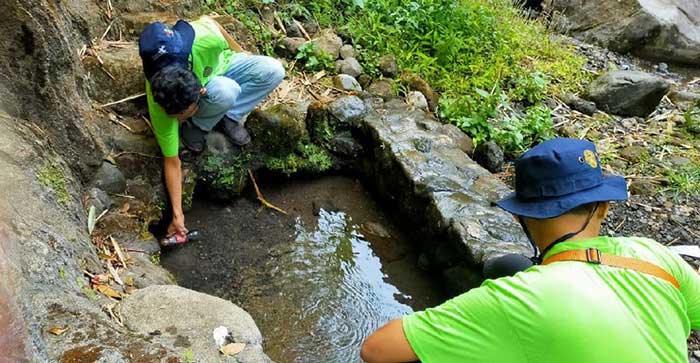
1. Flowing Water Is (Not) Safe to Drink
You’ve probably seen posts on social media where people are drinking water directly from flowing sources in the mountains, such as small streams or lakes. It does look very refreshing.
However, even if the water appears crystal clear, if it’s not a dire emergency, it’s best to avoid drinking it directly. Why? Because you can’t be certain whether the water is truly free from bacteria or not.
Always remember that flowing water undergoes a fairly long journey before we encounter it. During that journey, the water could pass through decaying animal carcasses and obstruct part of the flow. It’s also possible that the water has been contaminated with the feces of wild animals.
Besides these two examples, there are many other factors that can lead to water contamination. In some remote areas where people still drink untreated water, they are at risk of exposure to gastrointestinal infections caused by bacteria and parasites like Giardia lamblia and Cryptosporidium.
So, if it’s not an absolute emergency, avoid drinking untreated water.
2. Drinking Small Amounts of Seawater Is (Not) Safe
We often hear the myth that if you’re stranded at sea, it’s okay to drink a small amount of seawater. This myth seems to be a misconception. Instead of quenching your thirst, you’ll end up dehydrated.
To understand this, in one liter of seawater, there’s approximately 35 grams of salt. The human body only needs about 15-20 grams of salt per day. When there’s an excess of salt in your body, it will rapidly dehydrate you (similar to the process of preserving meat with salt), causing you to quickly feel thirsty and become dehydrated.
Dehydration can lead to seizures, dry mouth, fainting, damage to organs and kidneys, and can ultimately result in death.
3. Standing Water in Natural Basins Is (Not) Safe to Drink
Stagnant water in natural basins like rocky crevices, soil, etc., can indeed be a lifesaver. But don’t attempt to drink it directly without boiling it first, especially if the standing water is not fresh.
Unlike flowing water where the water is constantly replenished with fresh water, standing water is likely to be a breeding ground for bacteria, parasites, and other disease sources. Drinking it directly is essentially like committing suicide.
4. Drinking Urine (Does Not) Prevent Dehydration
In a truly dire emergency, if it’s not genuinely life-threatening, avoid drinking urine. While the body can tolerate drinking it 1-2 times, remember that urine is a waste product from our bodies.
The urine of a healthy person (which is clear) contains 95% sterile water and 5% waste, including substantial amounts of nitrogen, potassium, and calcium, which can cause problems.
When you drink urine, the kidneys have to process waste that had already been trying to be eliminated from your body. This puts extra strain on the body’s filtration system, requiring even more water to complete the filtering process. Instead of quenching your thirst, you’ll become more susceptible to dehydration.
5. Cactus (Is Not) a Source of Water
Obtaining water from cacti may be one of the myths we’re familiar with, especially from Western movies and favorite cartoons. But did you know that the water contained in cacti is fibrous and not abundant? To quench your thirst, you would need to harvest many cacti.
Most of the water content in cacti is quite acidic and can lead to vomiting, diarrhea, and even cramps. In addition to the acidity, many types of cacti also contain toxic alkaloids that can lead to kidney blockages.
Cacti can indeed save your life when stranded in desert areas, but don’t consume them excessively.
6. Snow (Is Not) Safe to Eat
If you’re climbing in snowy mountains, you might have thought that it’s easy to get drinking water because you can simply eat the snow to hydrate yourself. This assumption is not entirely wrong. Snow can be turned into drinking water after boiling it first.
Eating snow directly requires body heat to melt it, and the more body heat you generate, the more vulnerable you become to hypothermia, as you’ll also lose body heat.
Moreover, snow on the ground can be exposed to harmful bacteria or other organisms that can make you sick when consumed directly. So, make sure to boil it first.
Those are the six myths circulating in society about drinking water from natural sources. Remember, one of the keys to survival is using common sense. If you know something is dangerous, minimize the risks.
Source : https://www.indosurvival.com



Tuliskan Komentar